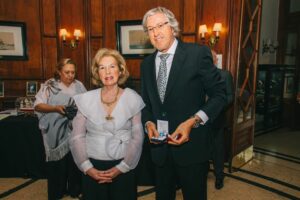
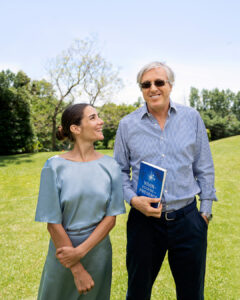
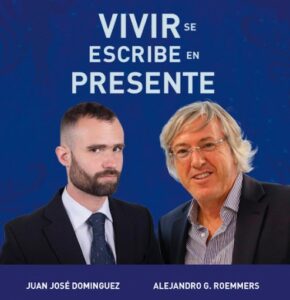
"Writer, producer, businessman, and philanthropist, Alejandro Roemmers has lived multiple lives. At age eight, he wrote his first poem; by twenty-five, he was running the family pharmaceutical company. Here, he opens up about depression and faith, exile, his bond with Pope Francis, reconciling with his father, Milei's Argentina, and the chosen family he has built with his friends.
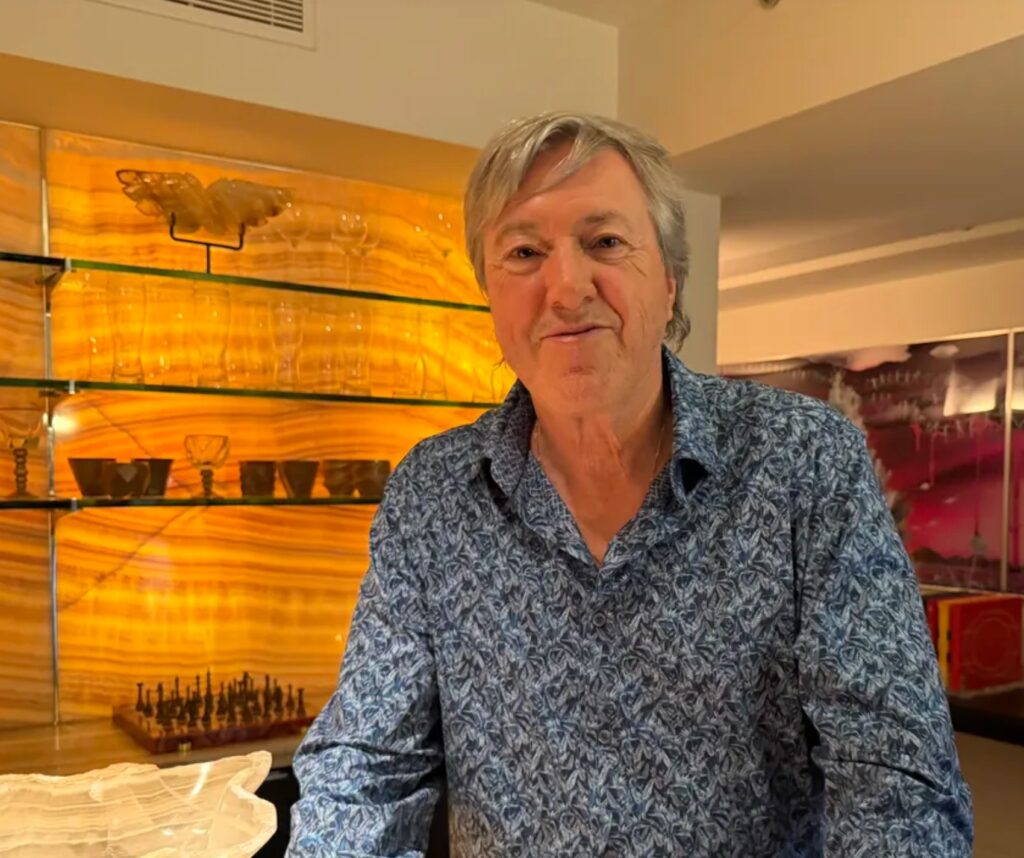
He wrote his first poem before he started reading poetry. He was 8 years old. That is where the self-taught big bang occurred for Alejandro Roemmers. He received no literary guidance or advice whatsoever, neither before nor after leaning into the vertigo of poetry.
On the contrary, his father wanted him in the family business. Alberto Werner Heinz Roemmers Wolter encouraged him to study business administration so that he could manage one of the largest pharmaceutical companies in Argentina.
Alejandro complied. From the age of 25 to 45, he dedicated himself full-time to Laboratorios Roemmers, professionalizing the company. But by following his father’s mandate, he paid a high price. One of his multiple lives was tinged with depression and melancholy, yet he kept moving forward. His spirituality, at times sui generis, helped him emerge from the mire.
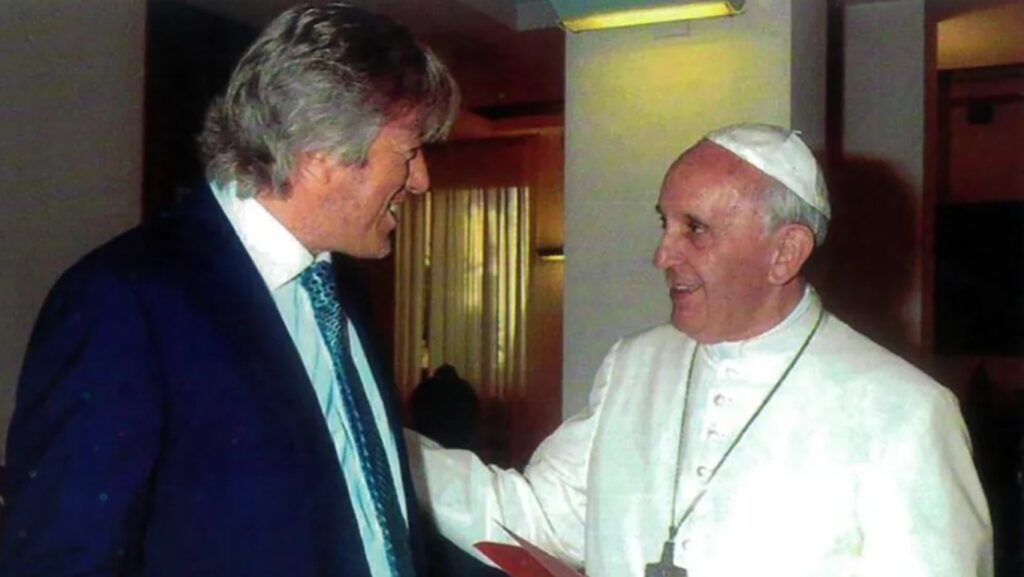
He toyed with the idea of becoming a monk, but his tastes and personality no longer fit into the corset of asceticism. He quickly realized that his lifestyle would not fund itself. However, he developed an interest in Franciscan culture and built a relationship of affinity with the unpretentious Argentine Pope. He even received the San Francisco Award for “the Franciscan spirit of his way of life.” In 2016, he premiered Franciscus, a reason to live at the Broadway Theater in Buenos Aires, a musical inspired by the life of Saint Francis of Assisi.
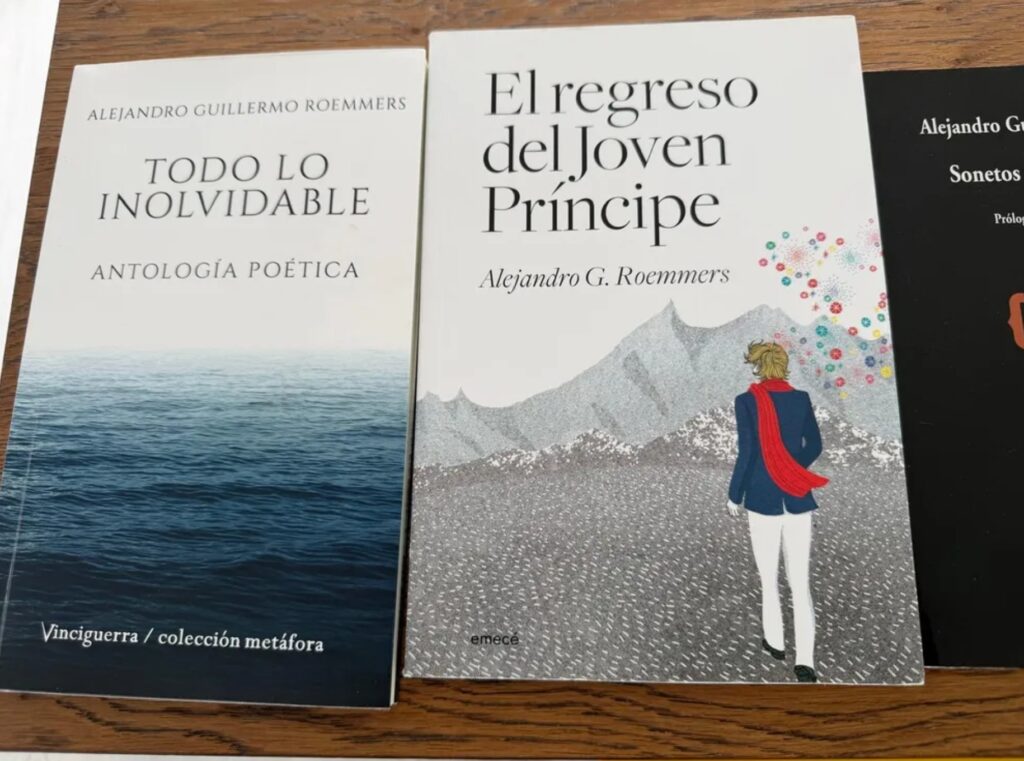
His self-made writing became fiercely cathartic. At the same time, it acquired artistic value to the point where he was honored with numerous awards and recognitions. The story of The Return of the Young Prince features his alter ego. Published in 2008, the book became a bestseller and was translated into more than 30 languages.
For Roemmers, poetry is a space where he tries to be honest without seeking grand effects. Along the journey of his life’s path, he discovered something important. It was a lesson left by the loneliness suffered during his exile in Spain as a teenager, when he suddenly lost contact with his friends. Alejandro understood that there is no single model for a family structure. At 68 years old, he moves through the world surrounded by his friends. They are his chosen family, as he defines them from his apartment in South Beach.
Today, as Roemmers reviews his biography with El Observador USA, the group is settled in Miami. Tomorrow, who knows.
Although he stepped back from the day-to-day operations of the powerful pharmaceutical company, he continues to sit on the holding board alongside his brothers. “I supervise the group because I learned what we do very well,” he explains.
Regarding politics, both in Argentina and the United States as well as the rest of the world, he appears somewhat skeptical. He regrets that the spirit of the times is governed by the rule of the strongest. He rejects the culture of polarization and suspects that social division is an intended outcome. He perceives it as a method of political building as well as a resource of the algorithm.
Without being a nationalist, he feels “completely Argentine.” He calls for finding consensus and greater stability for his native country. “We should achieve long-term common policies. All that lack of trust and predictability is what harmed us. Not placing faith solely in charismatic people and magical solutions,” he hopes during an extended conversation with this outlet.
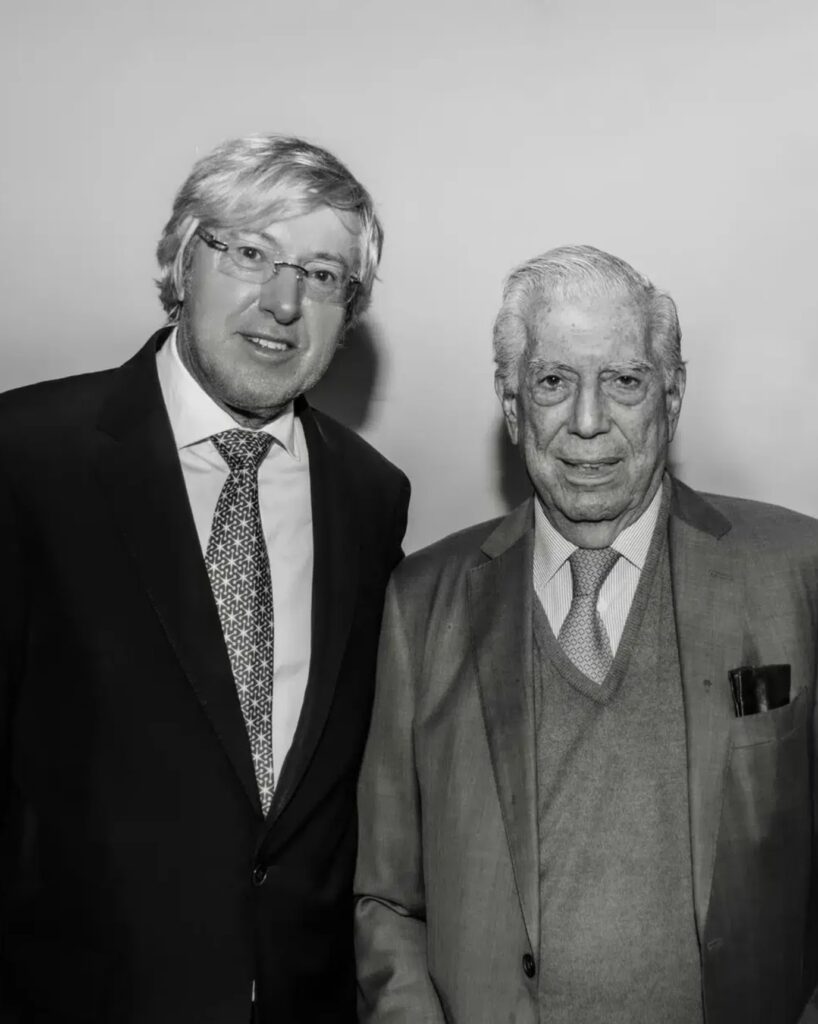
In 2025, Roemmers presented The Mystery of the Last Stradivarius, a novel that combines suspense, art, and history, and whose prologue was written by Mario Vargas Llosa. The Argentine author and the Peruvian Nobel laureate, who passed away last year, became close friends.
Roemmers has just presented Todo lo inolvidable, his new book of poems. It is an anthology of sonnets and free verse texts. The selection spans his work from the first steps when he began, tentatively, the adventure of writing.
How was the family decision to move to Spain when you were a teenager?
I was born and lived in Buenos Aires until I was 15 years old. I studied at the German School of Martínez. I completed the first three years of high school at the San Juan el Precursor School in San Isidro, until the guerrilla unrest started in Argentina. Terrible.
Did you suffer any threats from guerrilla organizations?
They kidnapped some people in my class. Just in case, my dad decided that we should leave. For safety. We went to live in Madrid. I finished high school at Los Rosales School, which is where the current king studied. I started university at the Luis Vives Institute, part of the Autonomous University of Madrid. That’s where I received my first poetry recognition.
The Poet
What was the story behind that first award you received?
I saw that there was a poetry contest at the university. It was open to all majors. I was in my first year of business administration. I was 19 years old. But the humanities students were there too. I took poems I had written and gave them a broad title: Thoughts, Memories, and Landscapes. I signed with a pseudonym. I won second prize across the entire university. And on top of that, there was a financial prize, which was quite a bit of money for me at that time. It was the first recognition in a place where nobody knew me. It was very nice.
Where did your poetic sensitivity come from?
Nowhere, from within. My mother was a fine arts teacher and a very good pianist, but she had no connection to poetry. I wrote my first poem at school at 8 years old in Santa Rosa de Calamuchita, Córdoba province, the day before concluding our winter vacation. I was always very self-taught; I never attended a literary workshop and never studied under anyone. What’s more, I started reading poetry long after I had begun writing it.
When did you start reading poetry?
My grandmother liked poetry. She used to cut out texts for me because she had a friend in the Navy who liked it. They were very close friends with Benito Quinquela Martín, who was friends with poets. So every now and then, my grandmother would give me newspaper clippings of poems. That’s how I read individual poems by various authors.
Did you inherit your artistic sensitivity from your mother?
Yes, I loved Chopin as a kid. Mom got us a piano teacher, and I learned to play. Later, when we moved to Spain, we didn’t have a piano, so I stopped. Many years later, I picked it up again. The sensitivity comes from my mom, through painting and music. In fact, I collaborated on two musical theater productions we did, Franciscus and Regreso en Patagonia. There are songs of mine. I have melodies in my head, but I can’t write them down because I’m not a musician.
Poetry has a very strong musical component.
Yes, yes, it has music. It’s music with words. For example, the Ave Maria in Franciscus came out of my head, and a musician set it to notes. There was a sound I had in my head that he couldn’t find. In the end, he found it because it did exist, and he put it in the Ave Maria, which is sung in Spanish instead of Latin, so we can sing as we pray.
Poetry requires a certain solitary introspection. How did you develop that side of your personality?
Yes, even as a kid I had an inner life, but it resurfaced strongly when we went to live in Spain. I was left without my entire group of friends. It was a very big change suddenly. There were no cell phones to stay in touch, and I reconnected with many friends 40 years later. Poetry was my great companion.
How did you make the decision to publish your first poetry book?
The first book consists of poems written between ages 14 and 18. I presented it upon returning to Argentina at the Catholic University, mainly pushed by my mom. I had no contacts in the literary world. I got hepatitis, and she told me, ‘Out of all those papers you have in your drawer, pick a few and publish a book.’ She told me about a publisher for inexperienced authors called Botella al Mar. I looked into it, went, and left what I had written. I didn’t want to; I only wrote for myself.
Why didn’t you study literature?
It was a difficult decision. I excelled in science and mathematics. My family, my father, and grandparents had high hopes that I would dedicate myself to the business. I wanted to write or pursue something spiritual. I even questioned becoming a monk at one point.
Did you seriously consider the possibility of becoming a monk?
Yes, yes, I thought about it. But I realized that I like to enjoy life rather than shut myself away. Many years later, I went with my dad on an excursion to Mount Athos. We stayed at a monastery. There, a young monk confessed to me that he hadn’t spoken to anyone in ten years. I clarified that I was only visiting. He invited me to stay. Then I asked him if he usually swam in the Aegean Sea, right in front. He said no. I do love swimming and skiing, and there’s nothing wrong with that. God made this wonderful world for us to enjoy too. I consider myself a spiritual and meditative person. I live from the heart and love, but I wouldn’t lock myself away.
Can one be spiritual in any context?
It’s difficult. Osho, whom I like because he questions everything, says that people equate spirituality with asceticism, and they don’t necessarily have to go hand in hand. He says you can be spiritual amidst the hustle and bustle of New York. Being a good person and being at peace in a secluded monastery in the Himalayas might not be so hard. The key is having that same inner peace in the hustle of Miami.
The Entrepreneur
What did you tell yourself when you decided to study business administration at the Pontifical Catholic University of Argentina?
I made a sort of inner agreement. I said: ‘I’ll dedicate 20 years full-time to the business, from age 25 to 45 I’ll collaborate with the family, give back everything I was given, and also learn to earn a living.’ Because my dad was very clear. He told me: ‘You can study whatever you want, you are free, but I’m not going to support you for the rest of your life.’
What did you reply to your father regarding that warning?
I replied: ‘Sure, you’re right.’ He also told me: ‘I supported you for many years, gave you an education, you traveled, you like living very well—well, figure out how you’re going to pay for it, because I won’t.’ He had a point. So I earned the right to have my own money and live well.
What is your current relationship with Roemmers Laboratories?
I am with my brothers on the holding board, and I continue supervising the business group because I learned what we do very well. But I’m not someone actively seeking business opportunities. It doesn’t interest me; I like helping people.
Did your promise to dedicate yourself full-time to the company from age 25 to 45 work out well?
Looking back now, yes. But I could have died trying. It was a time when I was very melancholic and depressed. I was not living the life I wanted.
What mark did you leave on the family business?
Even though it wasn’t what excited me most in life, I realized that a company is ultimately a group of people. So I did a lot on a human level: personal development seminars, photo exhibitions by employees, events and celebrations for families and local communities. In Brazil, we set up an art space for kids in the favelas. In Bariloche, we ran environmental campaigns 30 years ago. I already felt a Franciscan connection to caring for life.
Were you responsible for changing the company slogan?
The company had the slogan “Prestige through Quality.” I wanted something much more comprehensive. Talking with my older brother, we liked “Conscience for Life,” playing on words in Spanish: conscience and with science for life. The entire essence of the company began transforming toward teamwork with much more open dialogue.
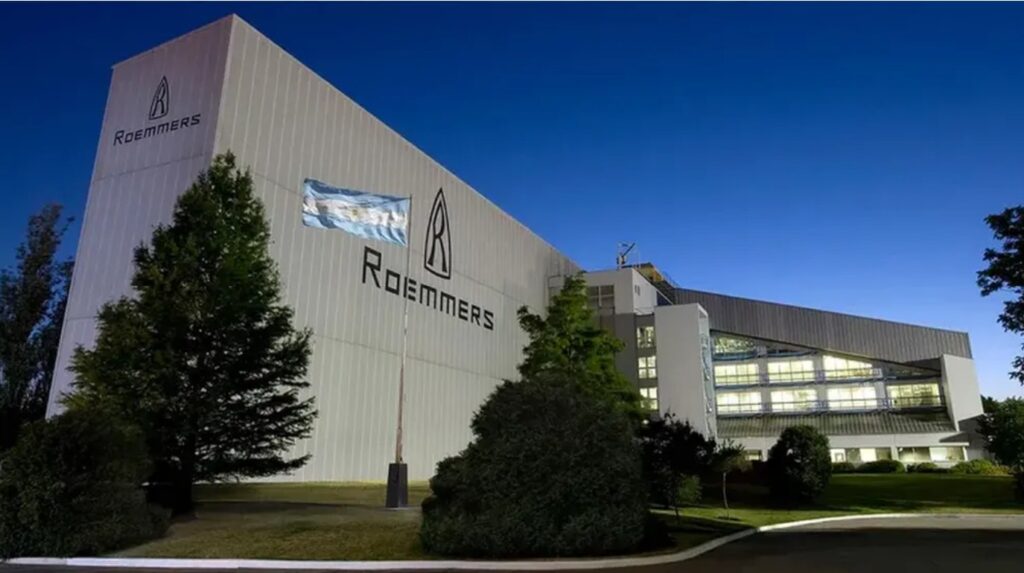
Was the change in the laboratories a shift from your father’s more vertical leadership style?
It was a very strict and vertical structure, inherited from my German grandfather. People had a reverential fear of my father; no one argued with him. I believed that everything should be discussed with different opinions. Now that is more normal, but back then it wasn’t at all. It was an absolute cultural shift.
Is it harder to govern oneself than to lead a company or a country?
Yes, yes. And that was it. I found joy in marketing and strategy, but I had a difficult period. Reading self-help, human development, and comparative religion books helped me a lot. I studied Buddhism, Zen, and Sufi stories while working at the company.
Poetry as a Savior
Is that how you managed to overcome depression?
Yes, I managed to be happy. Starting at age 30 I began to feel better, because in my 20s I had been very depressed. It was a tough time. To such an extent that during that period, working at the company actually helped me. During the week I felt better because I had a schedule that structured me and pulled me out of the black hole. That’s where poetry became my companion and saved me.
Was the depression also due to loneliness?
Yes, I was depressed and very alone. When we returned from Spain to Argentina, I had no friends. And I wasn’t interested in being with just anyone; I wanted to be with someone who had depth. It had to be someone spiritual, not just being around people for the sake of it. It was a difficult stage.
Is the ideal state of mind for writing poetry being a little depressed?
The president of the Poetry Society of America told me that there was no good poem that was cheerful. And I said, “That can’t be; now I’m very happy, so I can’t write poetry?” But it’s true that there is always a certain melancholy because we are going to die, and we become aware that life is fleeting. Pain makes you take refuge in poetry and literature. And that helps a lot.
What value do you place on friendship and the group of friends who accompany you?
I am always with friends, always accompanied, because I lived alone for many years. After all that growth, I decided I wanted to live life with a family of my own choosing. A family of friends is how I live my life. My friends travel the world with me, rotating in and out. We were in Miami following the soccer championship, then we’re going to Ibiza, always with my group of friends.
The Bond with His Father
Did your father, Alberto Roemmers, ever come to understand and value the life you chose?
Yes, thank God, he did. It was very hard for my father to acknowledge my achievements because he felt that I accomplished things with less effort than he did. He used to say that success is 90% perspiration and 10% inspiration. In my case, the percentage of inspiration was higher. But in the end, he came to appreciate me. He would tell everyone that the person leading the company is the poet. I used to tease him: “You’ve turned into a softie, complimenting and hugging me all the time.”
Did you reconcile with your father?
Yes, we reconciled. For many years I was very distant. Emotionally, it took a lot for me to re-engage. But we had a beautiful reunion in the last 15 or 20 years of his life. We built a lovely relationship. Thank God he lived a long life: he died at 96. Both of us could have died much earlier.
Could you have died young as well?
Yes, because during my period of sadness I didn’t care much whether I lived or died. So I took risks in many areas. It was a time of pure survival.
Was it hard for your father to understand you?
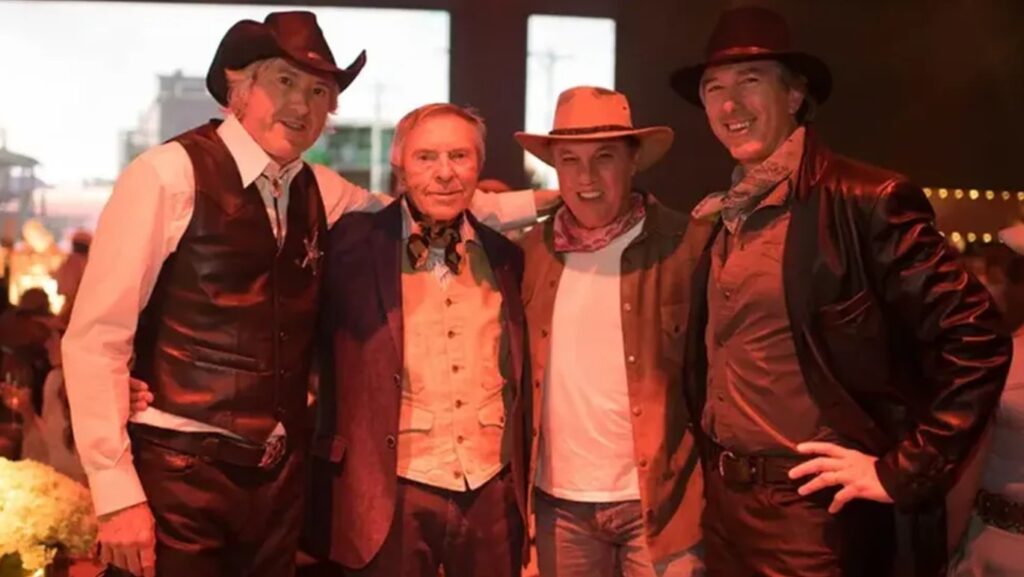
It took him a long time. He told me: “I’ve come to understand that you’re a complete package; I can’t just pick what I like and discard what I don’t or what is very different from me, because you wouldn’t have those virtues if you weren’t this way.” Well into his 90s, he started coming to my literary presentations. When I held a costume party for my 60th birthday in Morocco, everyone said my old man would never dress up. But he came dressed as a cowboy. He acknowledged my values as a human being, and it was very moving. He asked for my forgiveness. I accepted, because he had been raised in a different era.
What was your departure like from the day-to-day operations of Roemmers Laboratories?
It happened during the 2001 crisis in Argentina, which affected the company. The three brothers were there, but there was no executive manager. Managing like that was very complicated. I suggested to my father that the only way it would work was through unity: a CEO and ourselves stepping back to give autonomy and offer opinions from a board of directors. I proposed a childhood friend whom I had coached and who had the right skills. My father and brothers accepted, and to this day, he is the CEO. He has our full support and did a wonderful job.
Combining being a poet and a multinational executive is not very common. How do you manage it?
No, it is not common at all. But the explanation is that it was the other way around. First, I was a poet, and then I went through a phase as an entrepreneur. Otherwise, it would be impossible. I don’t think someone who is attracted to business and retires one day can suddenly become a poet, because it is an essence you already bring with you. The business phase was just that—a phase. My nature is that of a spiritual and mystical person.
Did that personality help at all in your role as a businessman? Did it make you better at it?
Yes, very much, because I had to negotiate agreements—both with the state and with competitors and companies that licensed products to us. Buying and selling. In those situations, human qualities served to create a pleasant atmosphere and seek a win-win outcome. If one side wins and the other loses, it doesn’t work. The beginning of my spiritual life started with a very simple phrase from my mother: “Put yourself in the other person’s shoes.” That way, you step out of your ego and learn to see reality from other points of view. It requires humility. Not everything comes down to a figure, thank God.
The Work
Is there prejudice against your work because you come from the Roemmers family?
I was once interviewed by Harvard radio because they didn’t have cases of successful entrepreneurs who were recognized poets. But in the literary world, to this day, I have suffered from that prejudice. In Spain, people have told me that my poetry deserves greater recognition in the canon, but that I never lived a bohemian life or mingled with other writers. I don’t know the judges, nor do I enter competitions. My poetry was always on the sidelines, but I enjoyed it immensely. I see how people are moved by it, and I love that.
What message is contained in The Return of the Young Prince, your bestselling book?
It is a spiritual tale, a life lesson. I was deeply moved by Saint-Exupéry’s The Little Prince, and it is a tribute as well as a spiritual continuation rather than a plot-driven one.
The protagonist, who seems to be your alter-ego, has a fraternal, committed, and somewhat innocent outlook on life. Is it possible to be like that in a world that is often competitive and hostile?
That is the great challenge. It is possible, because I did it. When my friends read the book, they tell me the character is me. As a child, one can dream and be idealistic, but there comes a point in life when one becomes disillusioned and realizes that not everything is as our parents told us. How can one avoid becoming cynical and distrustful—what Saint-Exupéry calls an adult person? How do you keep the heart of a child? I have spent my whole life dedicated to that. I wrote it at age 14 in a poem: to love everyone, each person, and anyone. I want to continue being the best person I can be, despite what others may do to me. I will return love to whoever hurts me.
You wrote your own epitaph in a poem. Why?
I live very peacefully with death now. In the past, I didn’t. When I was depressed and sad, no, because I felt I hadn’t truly lived. Many people worry about their death when in reality they should worry about living. As Antonio Muñoz Feijoo wrote: “Dead are those whose souls are dead while they still live.” I took the best from my parents: the artistic side of my mother and the German organization of my father. So I plan for the future. Therefore, why leave the epitaph until the end?
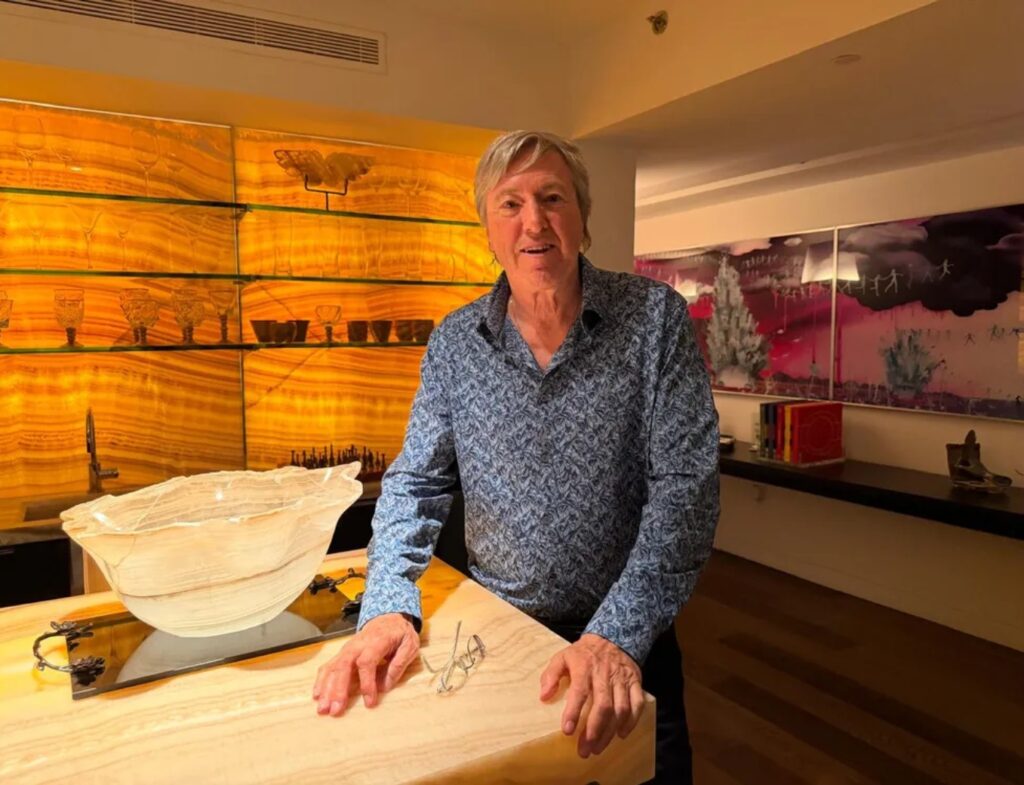
You are a philanthropist and promote culture and education from the Argentine Foundation for Poetry and FestivalAr. You also promoted the Embrace of Assisi and led the Not Alone global gathering in St. Peter’s Square together with the Vatican Fratelli Tutti Foundation. How do you define who to help?
I don’t always give what people ask of me, I give what I think they need. If I believe I can do good, I don’t care if the person harmed me or is bad. I have even helped people who harmed me. If before helping someone I have to judge them and study their life, to see whether they deserve it or not, I wouldn’t help anyone. It is a good excuse not to do it.
Is solidarity tied to a religion, or not necessarily?
It doesn’t need to be structured. After the earthquake in Venezuela, there are people helping victims who don’t hold beliefs in any religion. They simply have values of solidarity and compassion. Religion helps when your life or the lives of loved ones slip away. If you don’t believe in anything, saying goodbye is sadder. I have a lot of faith. For me, God is love, connecting us not only with the best of ourselves, but with a type of energy that governs the universe. Without love, no one’s life would make sense. It is the only real thing.
What is your opinion on artificial intelligence?
It isn’t entirely artificial, because in reality it is the sum of all natural intelligences. By connecting all of us, we create that. But it isn’t artificial; it arises from our intelligences. It should be called common or pooled intelligence. Borges was like a precursor to AI, because he imagined that—the universal library, all that knowledge within reach. He had read everything, whereas we don’t have the time or possibility to read so much.
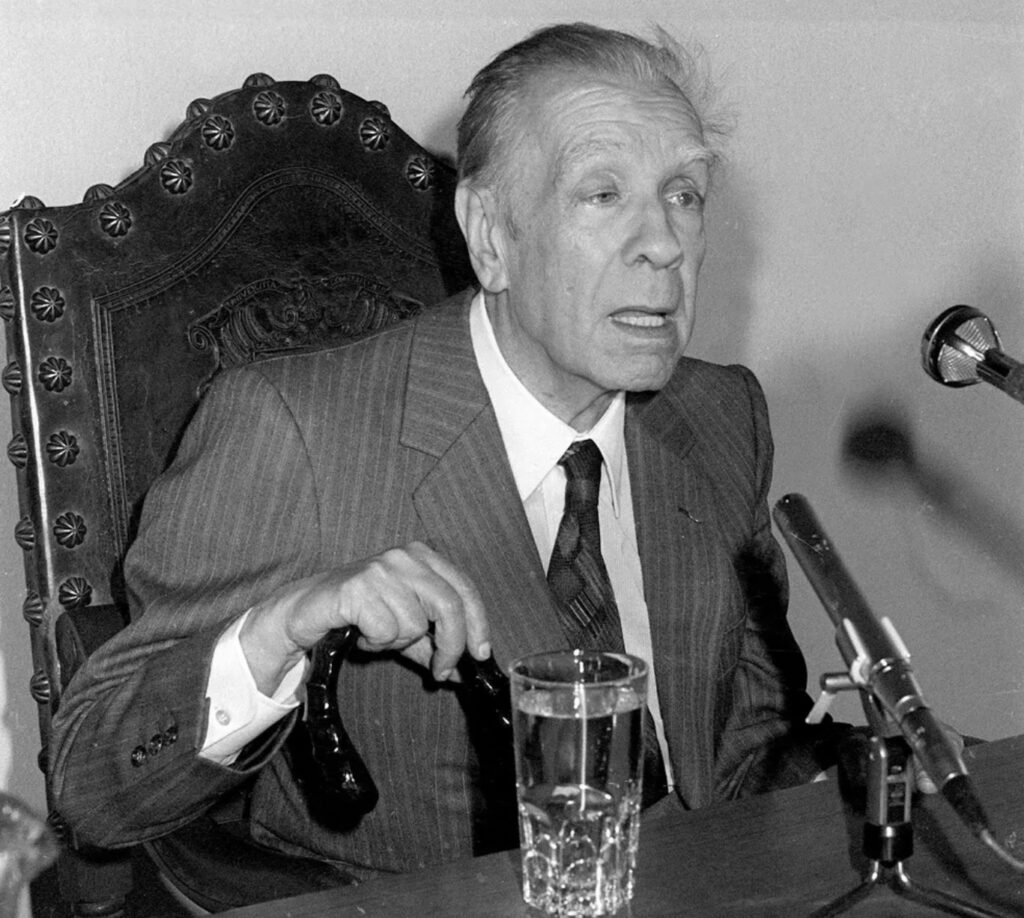
You bought more than 30,000 original pieces by Borges. What do you plan to do with that valuable collection?
Yes, it is the best collection of Borges manuscripts in the world. There are letters from him and his mother, photos, and first editions. This year, for the 40th anniversary of his death, we exhibited them in Madrid and Switzerland. The purchase was not made to keep or hoard it, but to make it available to the public. We are waiting for the national government to designate a place to display it to students, tourists, and experts who want to conduct research. We are even thinking of a kind of touring, interactive show using AI about Borges.
The Relationship with Argentina
What is your relationship with Argentina? Do you feel Argentine, despite being a citizen of the world?
On the one hand, I feel completely Argentine. I love the country, even though I no longer reside there. We Argentines are open people and welcome foreigners very well. We are a welcoming homeland. And our land has so much natural beauty. I also love Spain, which welcomed me at a difficult time. I have a book called Spain in Me. But at the same time, I disbelieve in borders and nationalities. I believe in universal brotherhood. In my home in Argentina, we had the River Plate jersey signed by all the players. And the Boca Juniors one, too. What matters is the game and the passion, without needing to take sides.
That universal brotherhood does not seem to be the sign of the times…
If humanity advances and retreats, we are unfortunately in a period of retreat. Any war hurts me. And I cannot rejoice if those on one side kill more than the other. It is a misfortune for both sides. Wars are a crime, whoever commits them. It should be resolved in another way. But organizations like the United Nations are not respected. They should have more importance in resolving global problems, such as wars, climate, pollution, or energy crises. It makes no sense for one country to solve them. It’s impossible.
Is history cyclical?
There were times of more light and greater darkness throughout history. I hope that this era, where power, the law of the jungle, and the rule of the strongest dominate again, does not last long. I would like to return to times without so much polarization, divides, and divisions.
Do you think division is a business?
Unfortunately, modern technologies divide us. Because division generates more consumption in many areas. For some media outlets, partisanship and discord sell. Collaboration is much better than competition.
How do you see the current situation in Argentina?
With virtues and flaws. We should listen to each other more, seek consensus and greater stability, and achieve common long-term policies. The lack of trust and predictability has harmed us. We shouldn’t believe only in charisma and magical solutions. Success is achieved through work, perseverance, dialogue, and consensus.
You were the executive producer of the documentary series Screen Addicts. Are you concerned about this issue?
The series addresses youth addiction to gambling, sex, and social media through screens. Now we are going to do the second one on depression and suicide. I discussed this a lot with Pope Francis. Humanity is inexorably walking toward a crossroads between the natural and the artificial. We will be a sort of cyborg. My fight is for us to remain as human as possible. The only thing that distinguishes us from machines is being vulnerable and compassionate.
What plans do you have for St. Francis Day on October 4th?
We want to organize a worldwide embrace to set a Guinness World Record. It marks the anniversary of St. Francis’s death, 800 years, which is very significant. We want people to embrace anyone—neighbors, siblings, everyone. It’s a massive hug of universal consciousness showing that we are all brothers and sisters on this planet, which was the Franciscan message. It is very ecumenical and unrelated to any religion, country, or ideology.
Editor-in-Chief of El Observador USA