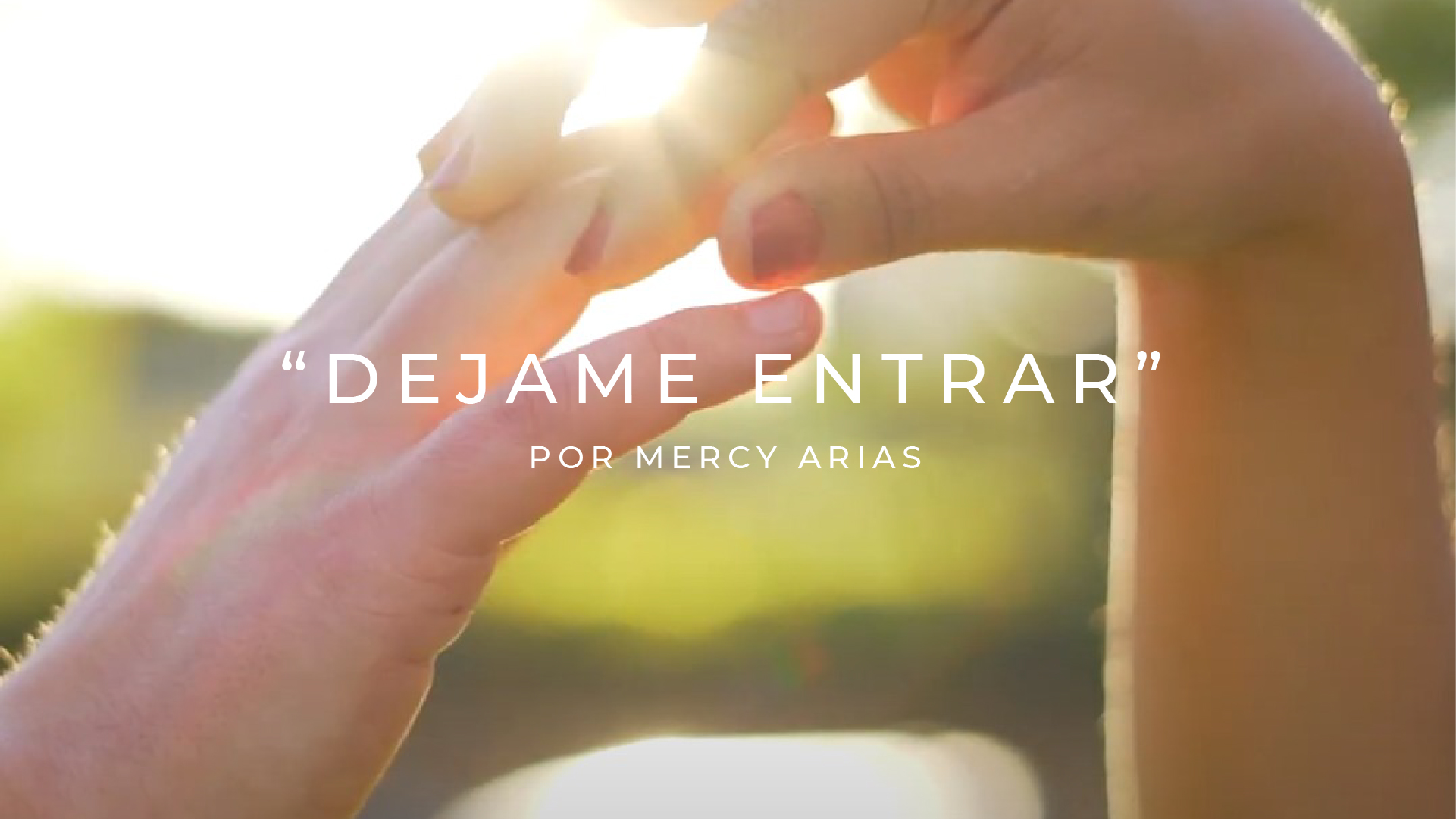
As part of the 800th anniversary of the death of Saint Francis of Assisi, the initiative “A Hug for Humanity” reminds us that fraternity is built through everyday decisions and actions.

We live in a world that seems to have learned to communicate at the speed of light, yet, paradoxically, finds it increasingly difficult to draw closer. We have never had so many tools to stay connected, and yet the distances between people seem to multiply. The wars, confrontations, hate speech, and fears running through our societies confront us with a question I consider fundamental: what are we doing to build a world in which we can all recognize ourselves as part of one and the same humanity?
I don’t believe the answer necessarily lies in grand speeches, new technologies, or solutions that depend exclusively on those in positions of power. Without downplaying the importance of all that, I am convinced that we must also recover something far more elemental: our ability to meet the other, to recognize them, to listen to them and, above all, to understand that beyond our differences, we share the same human condition.
There are moments in history, like this one, when it is not enough to stand aside and watch as fear, division, and confrontation lead us into darkness and destruction. The world is going through a time of deep uncertainty, in which global military spending reached $2.887 trillion in 2025, according to the Stockholm International Peace Research Institute (SIPRI), marking its eleventh consecutive year of growth. Behind those figures are resources, decisions and, above all, human lives. In the face of such a reality, I believe we need to ask ourselves what place we are giving to peace, fraternity, and solidarity in our individual and collective priorities.
Perhaps the next great leap humanity needs is not outward, but inward. Not about reaching farther, but about drawing closer to one another. Not a leap in technology, but in consciousness. Because we can develop extraordinary machines, explore new planets, and achieve scientific breakthroughs that until recently seemed impossible, but if we are unable to recognize ourselves in the person standing before us, we will keep dragging along the same difficulties that have accompanied us for centuries.
In this sense, there is a figure who continues to illuminate our present with extraordinary relevance: Saint Francis of Assisi. Eight hundred years after his death, his message of fraternity, humility, and respect for all forms of life retains a strength that transcends the boundaries of time and religion. Francis understood that true wealth lies not in accumulating, but in sharing; that greatness lies not in imposing oneself on others, but in serving them; and that love cannot be limited to those who think, believe, or live as we do.
My connection with Franciscan thought has been an essential part of my personal and humanistic journey. In 2023, I had the honor of receiving the Saint Francis of Assisi Award, granted by the Pontifical University Antonianum in Rome, which belongs to the Franciscan Order. That distinction, which recognized my career and my commitment to spiritual and humanistic values, also meant a responsibility: to ensure that those principles do not remain solely in the realm of ideas, but can be translated into concrete actions, capable of fostering encounters and awakening a shared consciousness.
This year, as we commemorate eight centuries since the death of Francis, which occurred on October 3, 1226, at the Porziuncola, his legacy offers us an opportunity to reflect on the world we are building and, especially, on the one we want to leave to future generations. His message does not belong exclusively to believers or to any particular religious tradition. Fraternity, respect for our neighbor, and care for our common home are universal values that can bring us all together, regardless of our nationalities, cultures, convictions, or ways of thinking.
From that conviction comes A Hug for Humanity, an initiative we are promoting in the hope that a gesture as simple as a hug can help us recover something we should never have lost: the ability to feel like brothers and sisters. It is not about creating an organization, founding a movement, or establishing a new school of thought. Nor does it pursue political or commercial goals, or involve fundraising. It is simply an invitation for each person, wherever they are, to reach out to another and share a hug.
It may seem like too small a proposal in the face of the scale of the problems that afflict us. What can a hug do in the face of a war, a humanitarian crisis, or a deeply divided society? It would be naive to think that a single gesture, on its own, can stop a conflict or solve the great challenges of our time. But it would also be a mistake to underestimate the power that individual actions have to transform the way we relate to one another. A hug can break down, even if only for an instant, the barriers we put up against others. It can convey affection, comfort, trust and, above all, the certainty that we are not alone.
The initiative proposes something deliberately simple: that today, everyone who wishes to join in hugs as many people as they can, whether family, friends, acquaintances, or even strangers. No preparation is needed, nor belonging to an institution or sharing a particular belief. All it takes is the willingness to reach out to the other, with respect and in each person’s own freedom. Because a true hug is not imposed: it is offered and received.
In Buenos Aires, this spirit will have a very special meeting point. Today at 7 p.m., we will gather around the Galileo Galilei Planetarium, located on Sarmiento Avenue in the Autonomous City of Buenos Aires, to share a moment of fraternity as part of this worldwide call. The gathering, which is supported by the Buenos Aires City Government, will last approximately 20 minutes. The choice of the Planetarium is no coincidence: its dome represents the sky we all share, which makes no distinction between nationalities, cultures, religions, or ideologies. If technical and operational conditions allow, it may also be specially lit up with the word PEACE, as a symbol of what we need to build together.
I would like this gathering to transcend the physical space and the moment in which it takes place. I would like those who come to the Planetarium, and those who take part from anywhere else in the world, to understand that they are part of the same experience, the same search. May the hug be not only an expression of affection, but also a way of recognizing the other as someone who deserves our consideration, even when their ideas, customs, or history are very different from ours.
There is an idea I consider central to achieving this fraternity: the other is me. This does not mean we must all think the same way, renounce our convictions, or ignore the differences that exist between people. Rather, it means accepting that behind every face there is a story, a family, dreams, fears, joys, and sorrows. That what unites us runs much deeper than the circumstances that separate us. When we manage to see the other from this perspective, confrontation ceases to be the only possible response, and space begins to open up for dialogue, empathy, and understanding.
It is also important to remember that fraternity cannot be exhausted in a single gesture. A hug can be the beginning of a transformation, but that transformation must continue in our daily lives: in the way we treat those around us, in how we listen to those who think differently, in our willingness to help those in need, and in the responsibility we take on in the face of others’ suffering. Peace is not merely the absence of war: it is something built every day, beginning in our homes, in our communities, and in each of our relationships.
That is why this call is open to believers and non-believers, to people of all cultures, nationalities, and ways of thinking. It does not seek to point out differences or determine who is right, but to offer a space in which those differences can coexist with the recognition of our shared humanity. At a time when we are so often invited to distrust, to compete, and to confront one another, reaching out to another person can become a deeply meaningful act.
Perhaps millions of hugs will not, on their own, solve the world’s problems, but they can change our hearts. And when hearts change, history begins to change. Perhaps the world won’t change tonight, but maybe two people will. And then two more. And two more. In this way, through small gestures, we can begin to build a different collective consciousness, one in which solidarity ceases to be an abstract aspiration and becomes an everyday practice.
Today, on the 800th anniversary of the death of Saint Francis of Assisi, I would like his message of fraternity to inspire us to take that first step. May each hug be a way of telling the other that we see them, that we recognize them, and that their existence matters to us. May we set aside our differences for a moment to meet in what unites us.
We don’t know how much a hug can change. But we can choose to give it. And perhaps, in that simple decision, lies the beginning of something much greater: the possibility of finally recognizing ourselves as part of one and the same humanity.