“This is the first major difficulty you encounter in your life and you must resolve it. And the truth is, even if you feel overwhelmed by it now, it's not the end of the world either."
VIVIR SE ESCRIBE EN PRESENTE
“That phrase was a coincidence, I know, but one of those coincidences that seem to be part of a plot that we cannot fully follow. ”
VIVIR SE ESCRIBE EN PRESENTE
“I have come to think that the universe is like that and that each one has to find the exact space that corresponds to them.”
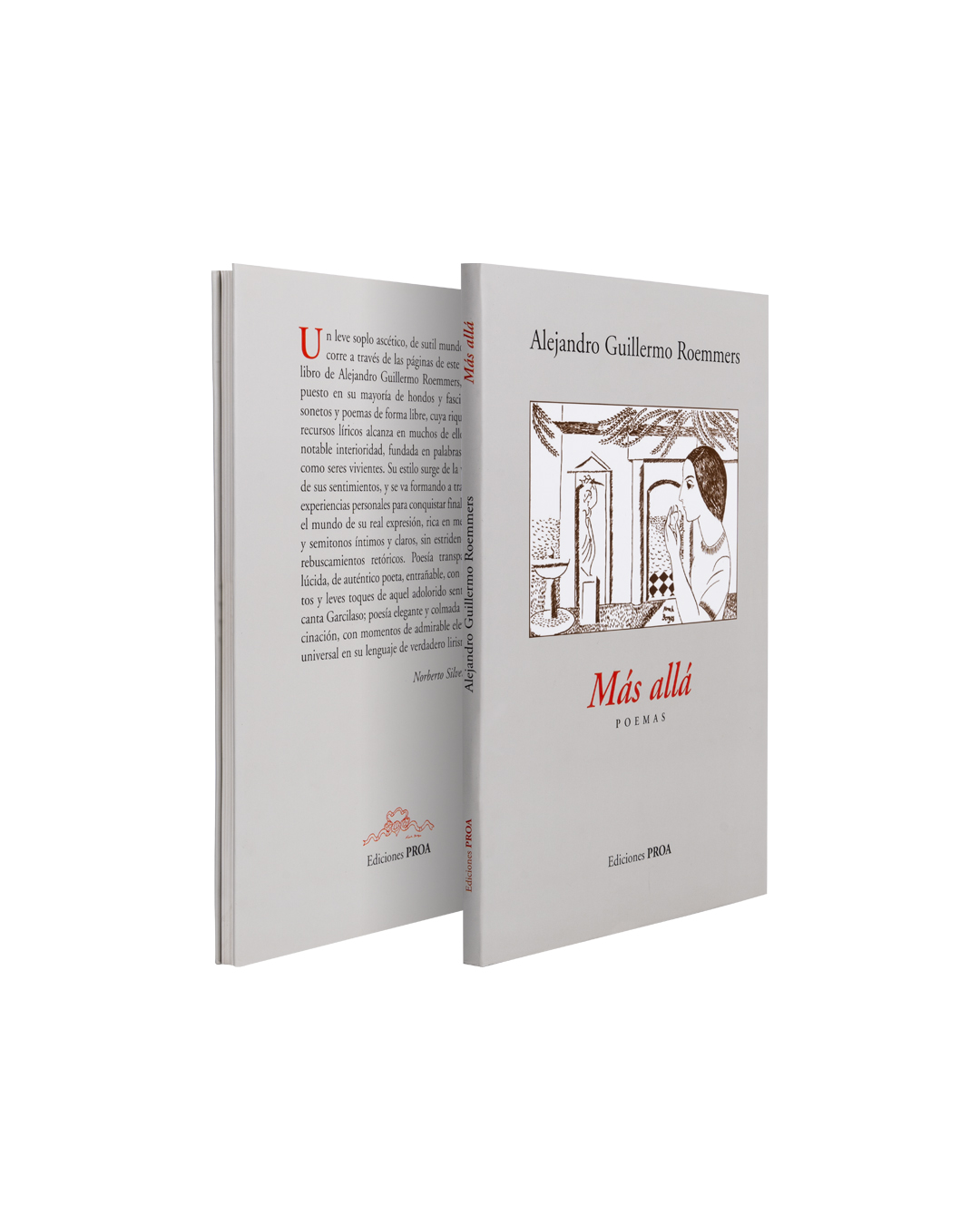
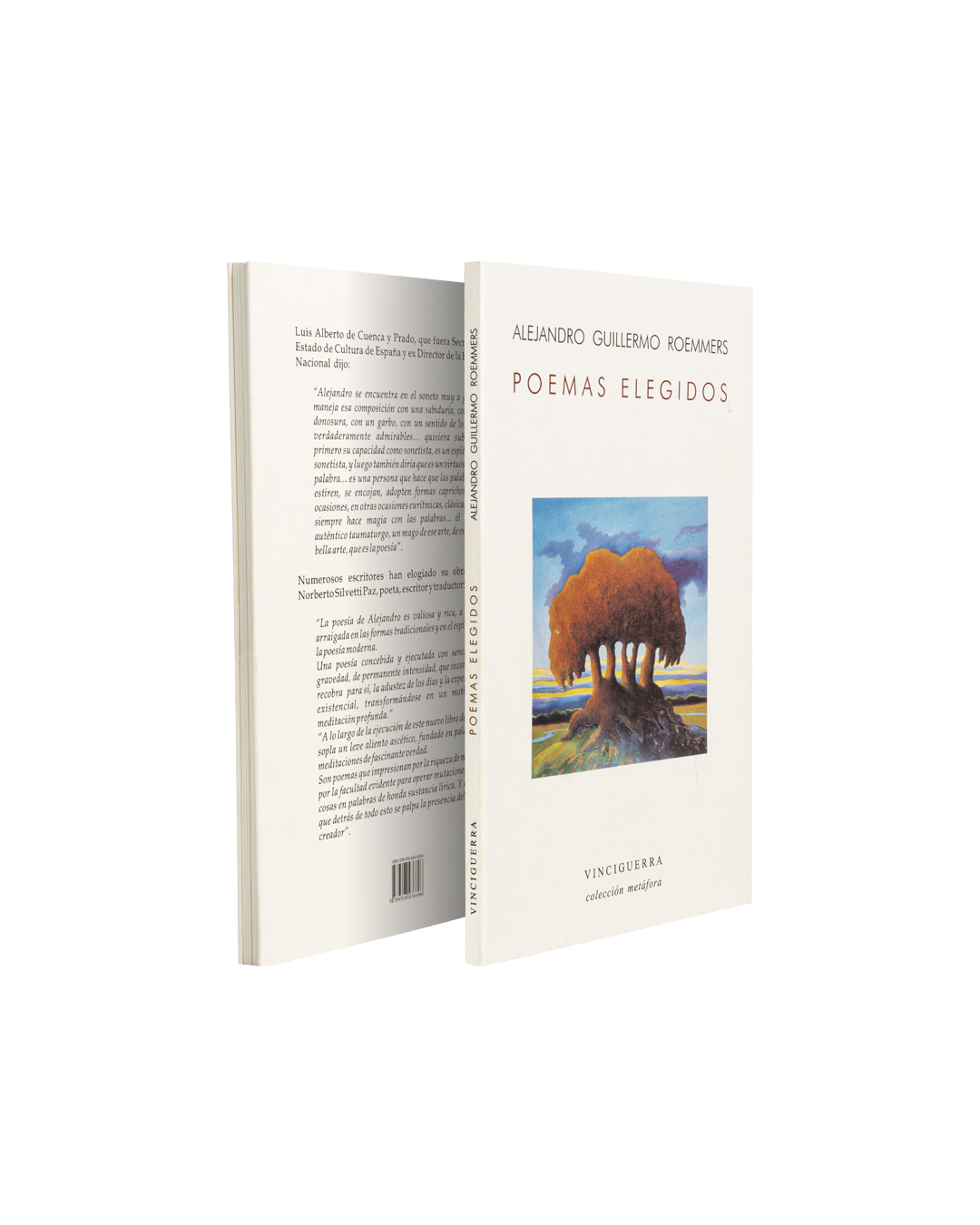
A slight ascetic breath, of subtle worldology, runs through the pages of this new book by Alejandro Guillermo Roemmers, composed mostly of deep and fascinating sonnets and free-form poems, whose wealth of lyrical resources reaches in many of them a remarkable interiority, founded on real words as living beings.
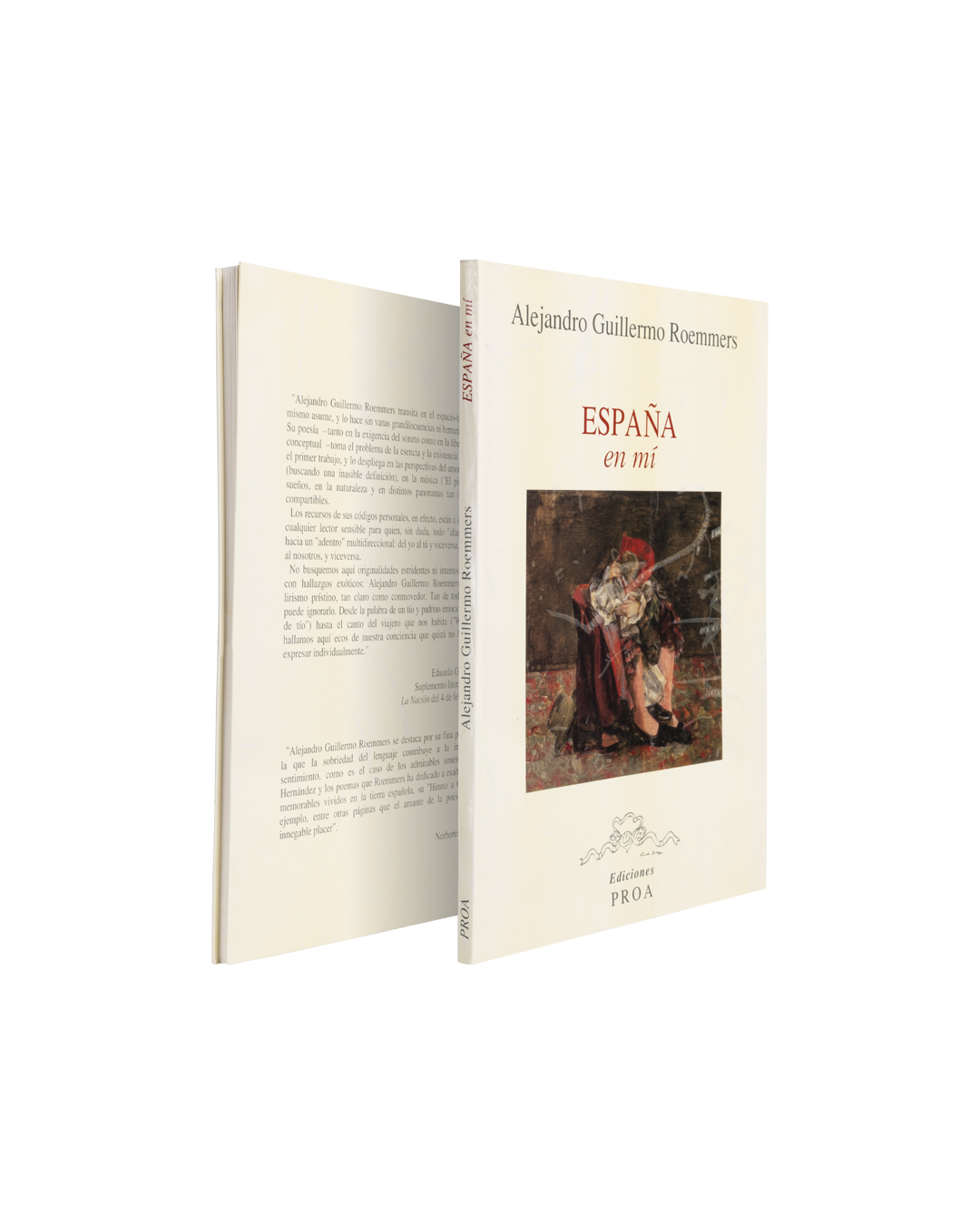
“ Alejandro Guillermo Roemmers transits in the space-time that he himself assumes, and he does so without vain grandiloquence or useless secrecy. His poetry -both in the requirement of the sonnet and in formal and conceptual freedom- takes the problem of essence and existence raised in the first work, and unfolds it in the perspectives of love, of poetry (looking for an elusive definition) , in music (“El piano”), in dreams, in nature and in different panoramas as intimate as they are compatible.
The depth and beauty of his poems is surprising in this book by Alejandro Guillermo Roemmers. His poetry reveals the moments of a life captured by an alert intuition and captured in images whose virtue is originality, if not the greatest, one of the important achievements of every artist. And this vital experience is expressed with unique lexical neatness and richness, in a metric that ranges from free verse to classic and modern sonnet, in which the background and the form harmonize to become a pure and true poetry.
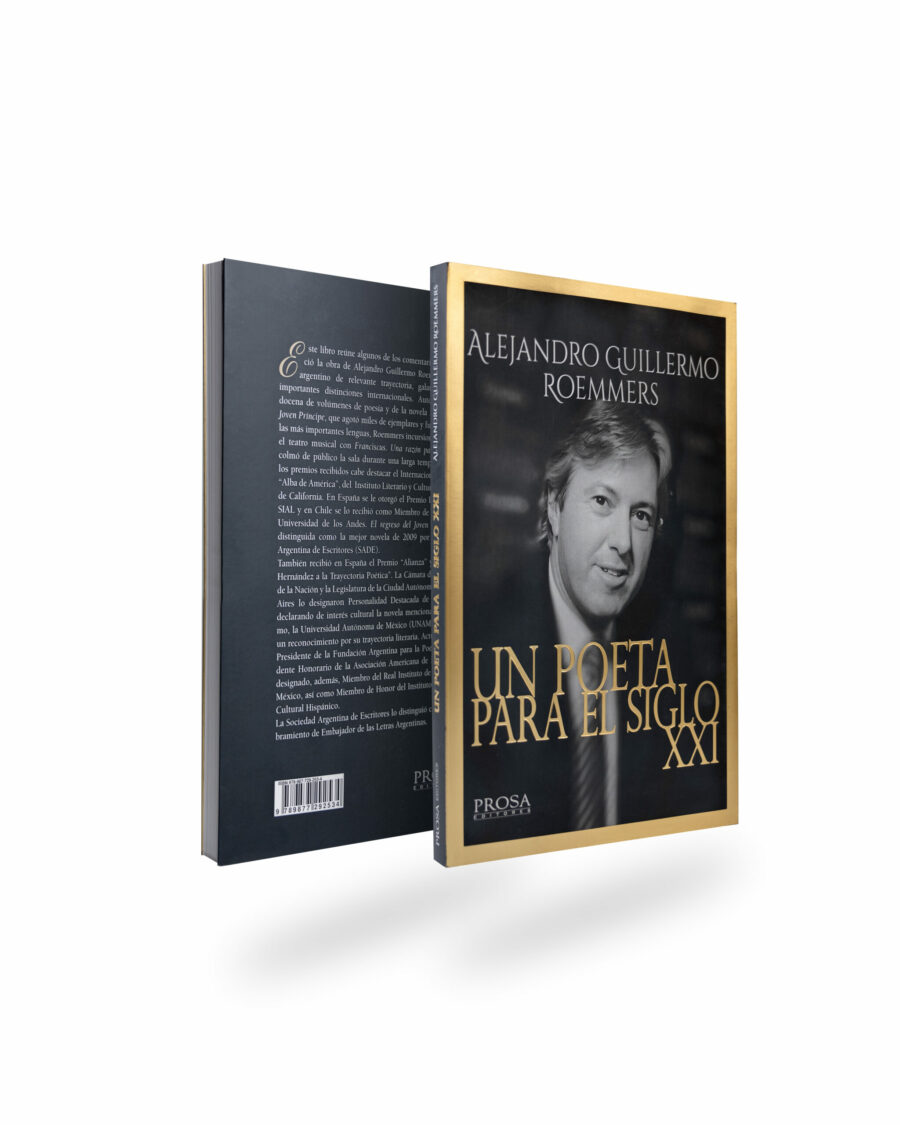
Year published: 2017 Genre: Poetry A selection of comments, prologues, interviews and reviews the works of the writer deserved, which move between the poetics inscribed in the tradition of Hispanic literature, the prose more committed to human values and the development of the critical spirit, in search of an enriching literature, without forgetting the aesthetics of hope and mercy that the author maintains throughout his career and that culminates in Franciscus, a musical about Saint Francis of Assisi for which -in addition to having written the libretto- he has collaborated with the composition of two of his themes.
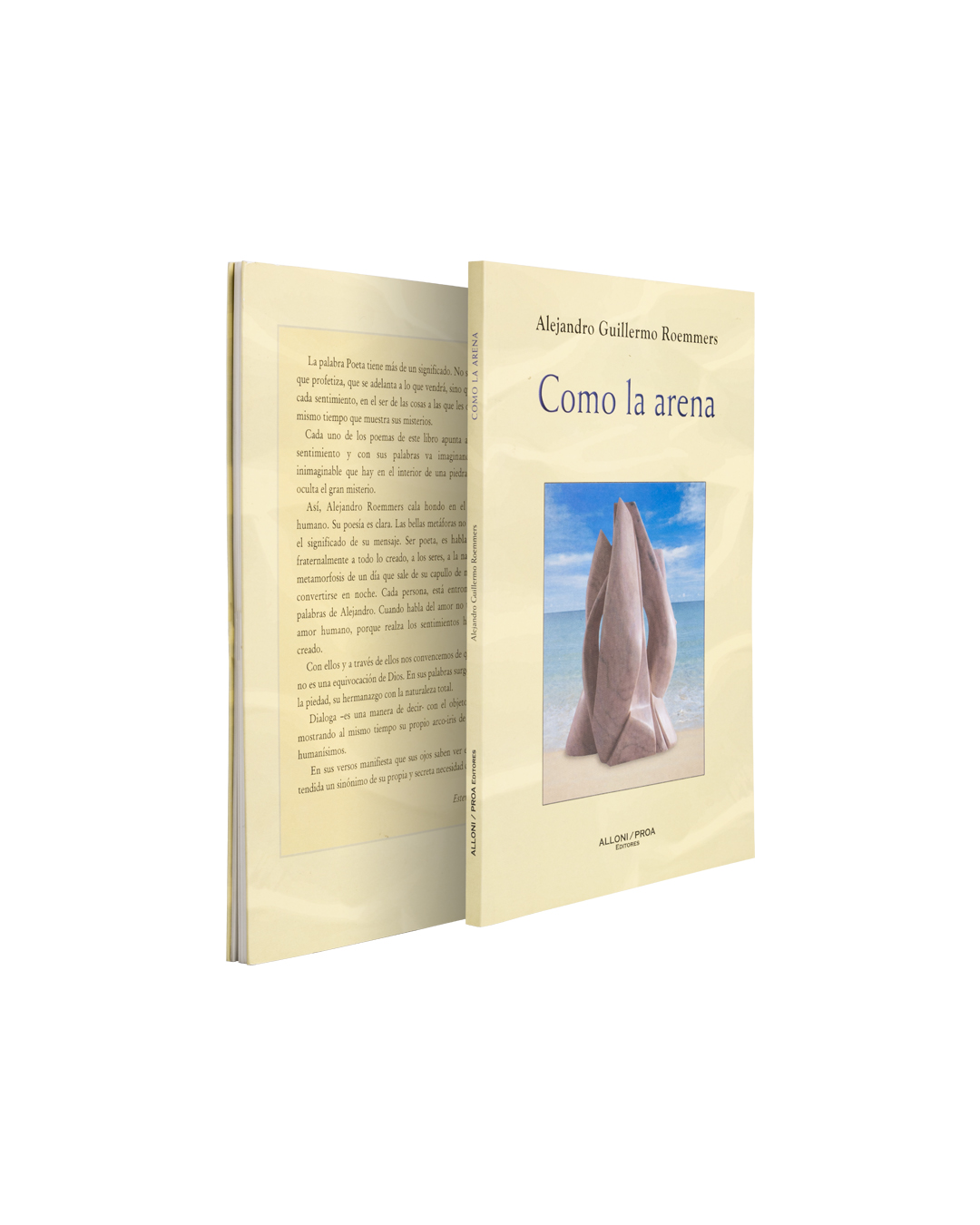
The word Poet has more than one meaning. Not only is it evidence that it prophecies, that it anticipates what is to come, but it delves into each feeling, in the being of the things to which it gives life at the same time that it shows its mysteries. Each of the poems in this book points to the enigma of feeling and with his words he imagines even the unimaginable that is inside a stone whose door hides the great mystery.
Luis Alberto de Cuenca y Prado, who was the Secretary of State for Culture of Spain and former Director of the National Library, said:
“Alejandro is very comfortable in the sonnet, he handles that composition with wisdom, with grace, with panache, with a truly admirable sense of the lyrical… I would like to first underline his ability as a sonnetist. He is a splendid sonnetist, and then also I would say that he is a virtuous of the word…he is a person who makes words stretch, shrink, adopt capricious forms on occasions, on other eurythmic, classical occasions, but he always works magic with words… he is a true thaumaturge, a magician of that art, of that great beautiful art that is poetry ”.
“This is the first major difficulty you encounter in your life and you must resolve it. And the truth is, even if you feel overwhelmed by it now, it's not the end of the world either."
“That phrase was a coincidence, I know, but one of those coincidences that seem to be part of a plot that we cannot fully follow. ”
“I have come to think that the universe is like that and that each one has to find the exact space that corresponds to them.”